
Introduction: the promise and limit of meaning
As I have argued in a number of articles on this site, as well as in my Traumatic Neurosis book,1 the concept of the trauma narrative is key to understanding the psychotherapy of trauma. In essence, the aim of therapy is to support the subject in constructing a story or a narrative of their traumatic experience(s) so as to give it a meaning that it previously lacked. This approach is based on the idea that trauma itself is characterised by an absence of meaning. In fact, I think it is fair to argue that the therapeutic culture of the twenty-first century is largely built upon the imperative: that which has been broken by unnamable suffering must be pieced back together through story. We encourage the subject to speak, to organise the chaos of their past injuries, to construct a coherent sequence of cause and effect, and thereby master the trace of overwhelming affect. Within this frame, narrative is understood as an engine of repair; a symbolic structure capable of translating raw, unassimilated pain into meaningful memory.
Yet, every practitioner who has conducted long-term clinical work knows the persistent limit of this approach. Again and again, analysis arrives at an impasse where narrative, no matter how refined, articulate, or elaborate, fails to settle the affective debt. The subject recounts the origin of their suffering with flawless precision, constructs an intricate historical account, and links every current symptom back to its origin, yet the core disturbance remains stubbornly untouched. Something continues to return; something resists being subsumed into the narrative.
This fundamental limit points us toward the boundary where Sigmund Freud’s clinical discoveries meet Jacques Lacan’s late radical reformulations. While the early Lacan emphasised the therapeutic efficacy of full speech and the historicisation of the subject’s desire within the Symbolic order, the late Lacan (roughly from Seminar XX onwards) recognised that the core of human suffering cannot be resolved by meaning alone. It is here that the shift from the trauma narrative to sinthome becomes critical. To move from the trauma narrative to the sinthome is to transition from a framework of meaning, interpretation, and historical reconstruction to an operative logic of knotting, singular organisation, and real jouissance. It is to recognise that the primary impact of trauma is not merely a break in history that needs repair, but an encounter with an unbearable surplus of enjoyment; an excess that can never be fully translated into words, but which can be bound through a singular mode of invention.
The trauma narrative: circumscribing the Real through Nachträglichkeit
To understand why the trauma narrative eventually reaches its limit, we must first examine how it functions in the psychoanalytic field. The primary function of the trauma narrative is to give meaning to meaninglessness; to circumscribe the Real. In its raw, unmediated state, a traumatic event is defined precisely by its absence of sense. It strikes the subject as an absolute rupture, an encounter with what Lacan terms the Real: that which is impossible to symbolise, impossible to imagine, and entirely outside the realm of signifiers. The Real event presents no intrinsic meaning; it is an enigmatic, violent intrusion that shatters the protective shield of the psychical apparatus.
How does such an event enter the life of the subject? As Freud demonstrated in his early clinical writings, and as I have explored in detail in Traumatic Neurosis Revisited, trauma is rarely a single, self-contained moment in time. Rather, it operates through the temporal logic of Nachträglichkeit or, as Laplanche preferred to call it, après coup. An early experience occurs, often in childhood, that cannot be processed by the subject’s register of knowledge. It leaves an raw trace, a blank space, or an unintegrated impression in the psyche; and at the moment of its occurrence, it is not yet ‘trauma’ because it lacks symbolic frame or sexual/ existential sense.
At a later date (often after puberty or during a significant life transition), a second event occurs. This secondary experience creates a retroactive chain of association back to the original experience. The second event activates the mnemic trace of the first, injecting it with overwhelming intensity and meaning. Only afterward does the first event become defined as ‘traumatic’. Through Nachträglichkeit, the subject engages in a retroactive process of historicisation. The trauma narrative is born precisely here: it is the subject’s attempt to construct a retrospective bridge over the void opened by the Real event. By weaving signifiers around the hole in experience, the trauma narrative gives shape to what was previously unnameable. It converts an absolute, meaningless rupture into a pivotal chapter of the subject’s personal myth.
Where the narrative fails: the excess of jouissance
In any attempt to translate experience into signifiers, there is an inevitable loss, but also an inevitable surplus. Freud famously introduced the concept of transcriptions in his Letter 52 (6 December 1896) to Wilhelm Fliess, noting that memory is re-transcribed across different psychological systems over time.2 Later, Jean Laplanche articulated this process as translation: the subject attempts to translate the enigmatic, compromise-laden messages of the adult world.3 However, translation is never exhaustive. There is always an untranslatable residue; a leftover that resists symbolic integration. In Lacanian terms, this residual excess is not merely a lack of words; it is an excess of jouissance (toxic, paradoxical enjoyment) attached to the body.
When an event occurs, for example, an instance of childhood sexual abuse, it does not simply leave behind a narrative hole. It impacts the subject’s bodily apparatus as a violent intrusion of enjoyment that cannot be mediated by the phallic function. This excess of surplus-jouissance, linked directly to the Lacanian object a, is precisely what traumatises the subject, and is what in Traumatic Neurosis Revisited I describe as drive-jouissance. The trauma narrative is constructed to master this drive-jouissance, but it operates under a structural paradox. On the one hand there is the aim of narrative, which is to bind the trauma completely within the Symbolic and Imaginary registers; on the other hand, there is the structural reality, which is that the narrative can endlessly re-describe the event, but the underlying drive-jouissance remains untouched by signifiers.
This explains why subjects in analysis can spend years continuously telling and re-telling their trauma story, refining every details, yet remaining trapped in the exact same repetitive, destructive symptomatic loops. The story grows richer, but the drive-jouissance continues its relentless, silent repetition. The trauma narrative is never ‘resolved’ in the sense of being fully historicised because the Real cannot be digested by the Symbolic.
Enter the sinthome: the Borromean knot
Recognising the limit of interpretation and narrative historicisation led Lacan, in his late teaching, to radically revise his conceptual framework. Moving beyond the primacy of the Symbolic order, he turned to topology and the mathematical logic of knots; specifically, the Borromean knot.4
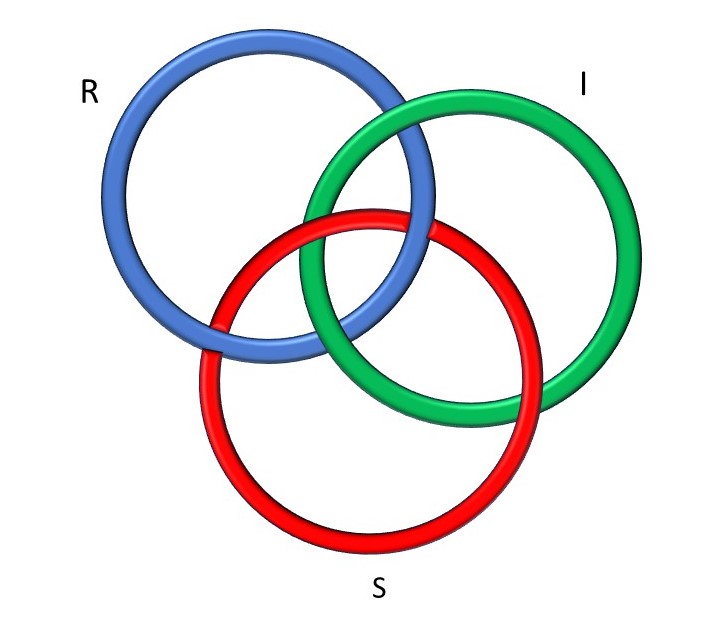
Figure 1 The basic RSI Borromean schema
In the ‘classical’ Borromean structure, these three rings are linked in such a way that if any one ring is cut, all three fall completely apart. And in his later teachings, most notably in Seminar XXIII, Lacan argues that each ring represents one of the three registers of human subjectivity (Real, Symbolic and Imaginary or simply RSI) and that the interlocking or knotting of these rings is what stabilises the subject.5 However, in the realm of clinical pathology and trauma, this baseline knotting is fragile, incomplete, or broken, and instead of three interlocking rings we have three separated, overlaying ones:
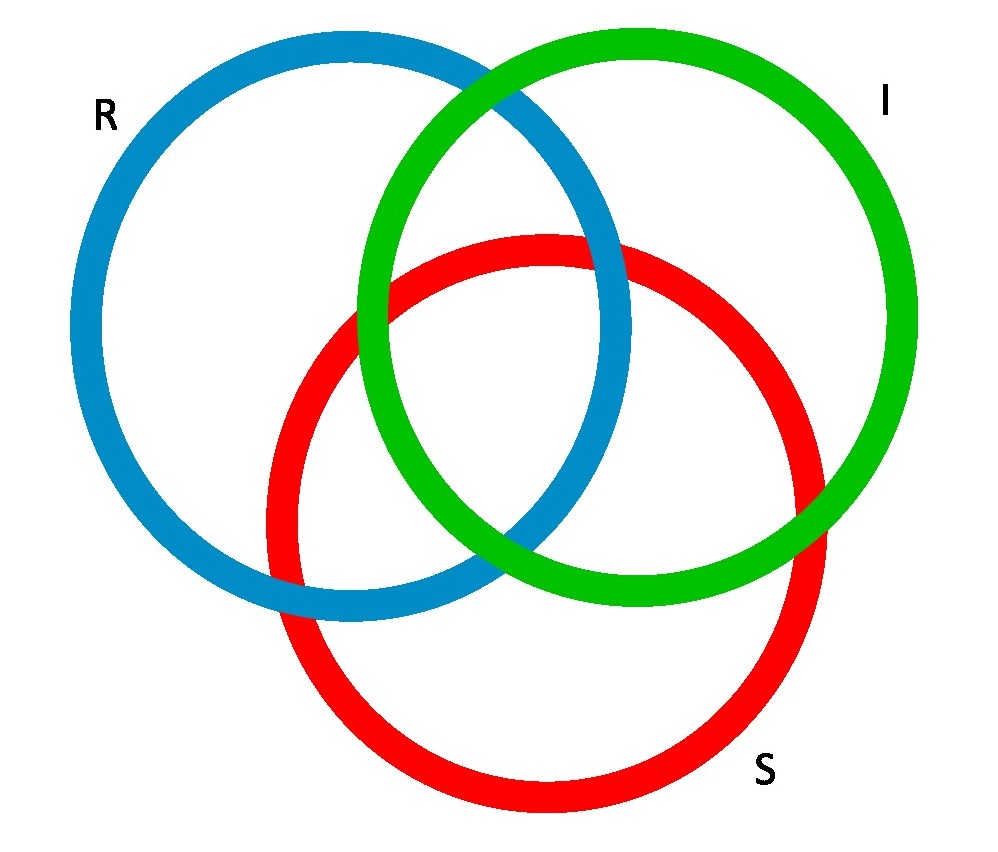
Figure 2 Overlaying RSI rings (non-interlocking)
In this projection there is nothing to stop the rings floating apart, which is essentially what happens in psychosis. In order to prevent such an occurrence it is necessary to introduce a fourth ring (Σ):
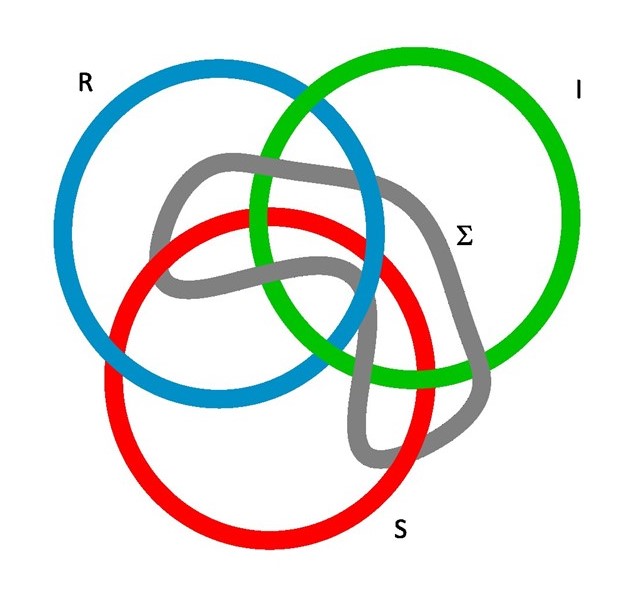
Figure 3 Overlaying RSI rings with sinthome
This fourth ring is what Lacan denotes as the sinthome. Derived from the archaic spelling of ‘symptom,’ the sinthome is not a pathological anomaly to be cured or eliminated through analysis. Rather, it is a singular, inventive mode of knotting that holds the Real, Symbolic, and Imaginary together. While the trauma narrative attempts to erase the rupture by filling it with meaning, the sinthome functions by incorporating the unresolvable trauma directly within the knot itself. The sinthome does not attempt to explain away the void, nor does it try to turn the Real event into a neatly resolved narrative arc. Instead, it accepts the tear in the fabric of the Symbolic-Imaginary, using that very tear as an anchor point around which a new, durable structure can be built.
It is important to note is that although this configuration is often portrayed as ‘the norm’ for the human subject, that is, as a kind of ‘base line’ for representing how the three registers would ‘normally’ be interlocked and thus preventing psychosis, in Seminar XXIII Lacan is very quick to point out that this is not the case:
It is precisely here [with the projection of the three ringed Borromean link] that we find what lies behind the error of thinking that this knot [link] is a norm for the relationship between the three functions that only exist one relative to the other in their implementation within the being, who, forming a knot, believes himself to be a man. It is not a break between the symbolic, the imaginary, and the real that defines perversion, it is that they already stand apart in such a way that a fourth term has to be supposed, which on this occasion is the sinthome.6
Now, consider the following schema:
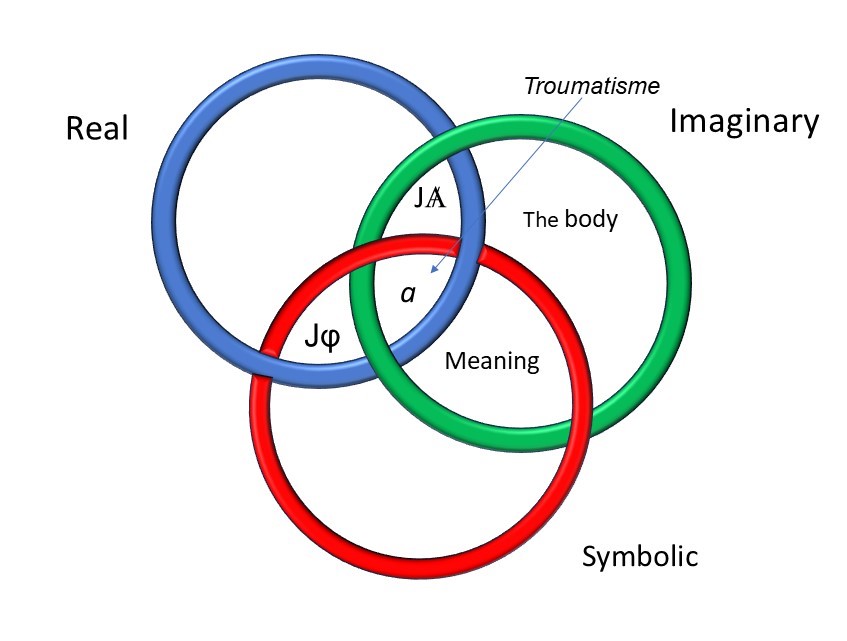
Figure 4 RSI Borromean knot with troumatisme
The first thing to note is that the term ‘troumatisme’ is a neologism coined by Lacan in Seminar XXI to convey the idea of the trauma as a hole or wound.7 It is also in the place of the object a (surplus jouissance). However, the really critical point to note is that this diagram appears to show the three rings (RSI) as interlocking, whereas I’ve just argued that in reality this is never the case. However, perhaps another way to look at this is to think of the sinthome more as a function than as an actual ring. In other words, even though we can represent it diagrammatically, as does Lacan, what we are really saying is that the knotting of the three rings is effected by way of the sinthome. Or, to put it another way, the representation of the sinthome as a fourth ring is simply to remind us that in their ‘natural’ state RSI are never interlocked or knotted; rather, it takes the introduction of the ‘sinthomatic function’ to achieve this.
If we were to show the above diagram with the sinthome as the fourth ring it would look more like this:
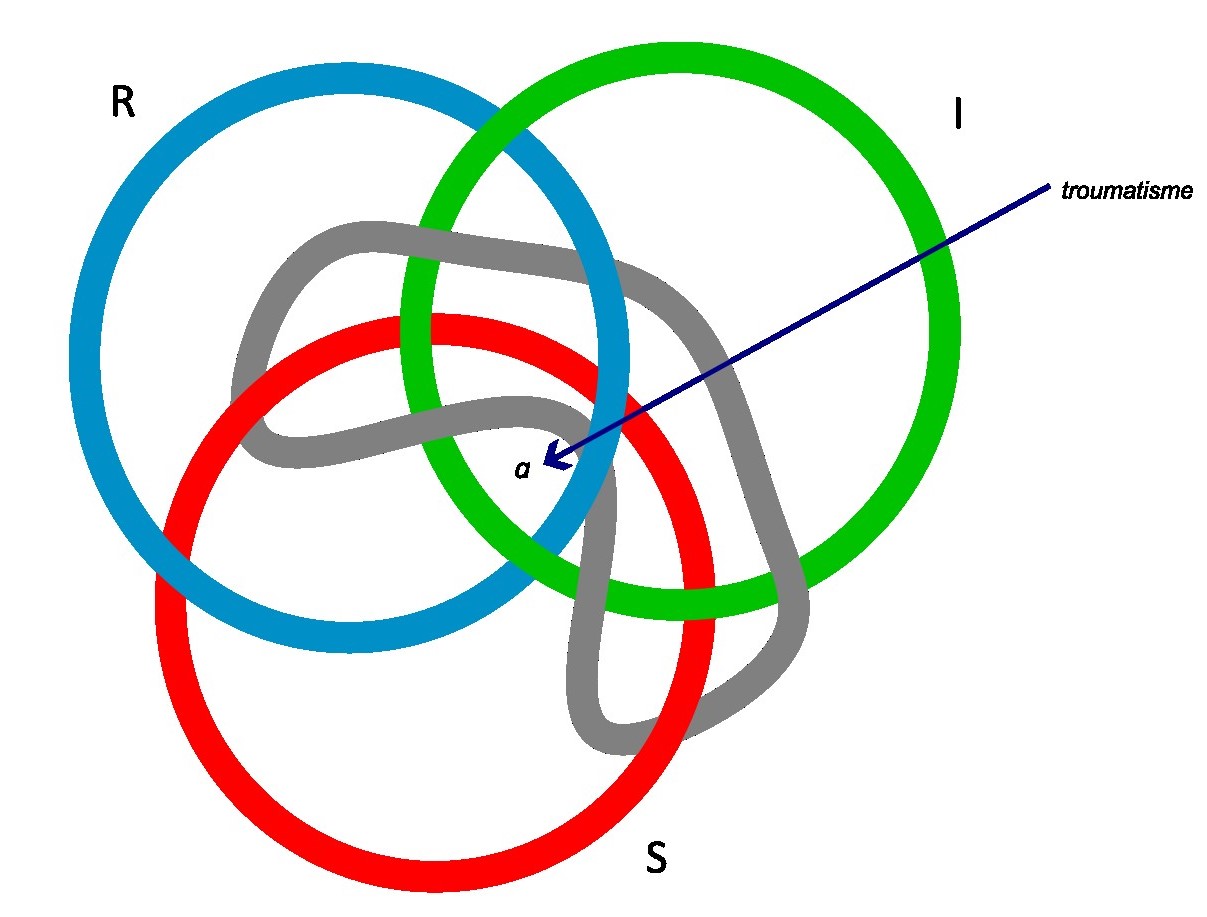
Figure 5 Overlaying RSI with sinthome and troumatisme
In this diagram, the RSI overlay one another rather than interlocking and it is only the fourth ring (Σ) that holds them together. My argument is essentially that the four-ring projection is a way to represent the process of knotting, whereas the previous interlocked three-ring projection represents the outcome of such a process. With regards to trauma (the troumatisme), as I argued above the sinthome ‘wraps’ it within the knot itself rather than ‘excluding’ it as is the case with the trauma narrative.
The clinical logic: dehistoricising the Event
To understand how this operates in practice, let us examine the specific trajectory of a subject working through severe historical suffering; for example, childhood sexual abuse by an adult or sibling. When a child experiences sexual abuse, the event arrives as a massive, unassimilable Real event. It creates an immediate void in the subject’s history. The young subject possesses neither the symbolic tools nor the sexual framework to comprehend what has occurred. As the subject matures, they construct a trauma narrative through Nachträglichkeit. They assign blame, map out sequences, understand the abuse within sociopolitical or psychological frameworks, and re-transcribe the experience across different stages of life. They might re-tell the story in therapy, write personal journals, or share their testimony. Yet, despite this extensive work of historicisation, the subject frequently reports a lingering, bitter frustration: The core trauma remains unresolved. The intrusive flashbacks, bodily distress, or repetitive self-sabotaging behaviours persist. The translation remains incomplete because the initial intrusion of drive-jouissance cannot be dissolved into words.
The decisive turning point in psychoanalysis occurs when the subject stops attempting to force the Real into a complete historical narrative. Rather, the subject moves to dehistoricise the Real event as precursor to the construction of a sinthome. Dehistoricising the event does not mean denying or forgetting that the abuse occurred. Rather, it means recognising that the traumatic event operates as an absolute uncanny tear the fabric of the Symbolic-Imaginary; a rupture that no amount of historicising or storytelling can ever bridge. The subject relinquishes the illusion that one day they will find the ‘final secret’ or ‘perfect meaning’ that will make the past feel completely healed or whole. They recognise the fundamental impossibility of full translation.
Once the tear is recognised as permanent, the focus shifts from interpretation to artifice and construction. The subject asks: given that this tear in my structure cannot be stitched closed with meaning, how can I build an apparatus that hooks onto this tear and enables me to function? The sinthome is precisely this ‘custom-built’ apparatus. It performs a knotting function rather than a meaning-generating function.
Lacan’s primary case study in Seminar XXIII was James Joyce. Joyce possessed an unmoored relation to his body and his family history, yet he avoided psychosis through the singular act of writing. Joyce turned his un-analyzable relation to language into a unique, world-historical literary artifice (Finnegans Wake). His writing did not ‘cure’ his trauma in the medical sense; rather, his writing was his sinthome; the exact knot that held his Real, Symbolic, and Imaginary together.
Returning to the clinical example of a subject who suffered childhood sexual abuse and who enters an analysis, we can think of the analytic trajectory as follows:
Firstly, there is what we might call the narrative phase during which the subject endlessly recounts the story of abuse, seeking to uncover every repressed detail but remaining stuck in victimhood and intense bodily suffering. However much the subject tries to circumscribe the Real of the trauma, something always eludes them. At some point, though this is by no means guaranteed, there occurs what we might call the sinthomatic shift whereby the subject stops trying to ‘fix’ the memory of the ‘original’ trauma. Instead, they harness the precise, raw intensity of that untranslatable energy (jouissance) and let’s say, for the sake of the argument, they construct an active, highly structured involvement in abuse survivor politics or advocacy networks. In this scenario, working within survivor politics is not merely an ‘ego coping mechanism’ or a ‘sublimation’ in the classical sense. It functions as a sinthome, an artificial structure that takes the raw, unassimilated Real of past abuse and anchors it into a highly organised, ongoing life practice. The subject no longer suffers passively from the traumatic residue; they have developed a know-how (savoir-faire) with their jouissance.
For other subjects, practicing a rigid religious ritual, engaging in specialised craftsman work, maintaining a specific relationship to bodily discipline, or operating continuously within a clinical or intellectual institution can perform a sinthomatic function. What matters is not the objective validity or ideological truth of the practice, but its topological effectiveness: does it tie the registers together and stabilise the subject’s life?
This shift from the trauma narrative to the sinthome profoundly alters the position and function of the analyst in contemporary practice. In the classical Freudian paradigm, the analyst’s task was to interpret: to decipher the unconscious, decode symptoms, and return hidden meanings to the subject. In the sinthomatic paradigm, interpretation takes a back seat to construction and knotting. The analyst recognises that interpreting the traumatic core only fuels the endless, infinite wheel of narrative (bla bla bla). The analyst must instead bear witness to the subject in identifying the exact locus of their untranslatable jouissance and supporting the subject’s unique, often unorthodox efforts to fabricate a sinthome.
The concept of the sinthome dismantles the naive therapeutic myth of total resolution or ‘clean slates.’ Analysis does not promise to return the subject to a mythical pre-traumatic innocence. Trauma leaves an indelible mark because it exposes the subject to the fundamental baseline of human existence: that the Real is non-sensical and that language has inherent limits. The end of analysis does not culminate in a perfect, harmonious narrative summary of one’s life. Rather, it culminates in the subject’s recognition of their sinthome: this is the specific, unanalyzable way in which my enjoyment is organised. I no longer demand that it yield meaning; I know how to handle it, craft with it, and live alongside it.
The analyst operates not as an authority on truth, but as an artisan or consultant in subjective construction. The question posed to the subject is no longer: what does your trauma mean? Rather, it is: what can you build with the raw residue that remains?
Notes and references
- Leslie Chapman, Traumatic Neurosis Revisited: Drive-Jouissance and the Wounds of Life, The Palgrave Lacan Series (Palgrave Macmillan, 2025).↩︎
- Sigmund Freud, The Complete Letters of Sigmund Freud to Wilhelm Fliess 1887-1904, trans. Jeffrey M. Masson (The Belkap Press of Harvard University Press, 1985).↩︎
- Jean Laplanche, ‘Après-Coup’, in Après-Coup (The Unconscious in Translation, 2017).↩︎
- Although, from a strictly topological point of view it is a Borromean link.↩︎
- Jacques Lacan, The Sinthome: The Seminar of Jacques Lacan, Book XXIII, ed. Jacques-Alain Miller (Polity Press, 2016).↩︎
- Ibid., 11.↩︎
- Jacques Lacan, The Seminar of Jacques Lacan : Book XXI : Les Non Dupres Errent: 1973-1974, trans. by Cormac Gallagher (Dublin: Unpublished translation by Cormac Gallagher, 2010)↩︎
This article is part of a broader research track. For a complete structural overview, please visit the The Borromean Clinic: Foundations of Psychoanalytic Theory Hub.
Last updated: August 6, 2026