
Introduction
In my previous post I argued that a psychoanalysis in the Real could be thought of as going ‘beyond psychoanalysis’ and that this apparently paradoxical statement referred to the idea of a psychoanalysis going beyond what Jacques-Alain Miller has described as the ‘what works’. By this Miller meant psychoanalysis either in the form of a ‘Freudian fundamentalism’, a ‘nostalgia’ or a ‘neuro-cognitivism’. The alternative, he argues, is a psychoanalysis that ‘fails’ and that operates in ‘a hole in the Real’. In the latter part of the article I introduced Lacan’s concept of the Borromean link (which is often but erroneously referred to as ‘the Borromean knot’)[1] and how this can be used to conceptualise the idea of a ‘hole in the Real’. In this post I will develop these ideas with a particular focus on Lacan’s theory of the sinthome and how it might help us better understand the workings of a psychoanalysis in the Real.
First, though, I would like to make a few remarks regarding Lacan’s journey to ‘Planet Borromeo’, as Elisabeth Roudinesco has somewhat uncharitably described it.[2] In his book on Lacan’s topology, Will Greenshields makes several references to what was essentially Lacan’s last seminar which took place in Caracas, Venezuela in July 1980 (although ‘seminar’ is probably a rather grandiose term for a talk that, in its transcribed form, takes up barely three pages).[3] This seminar is probably best known for Lacan’s address to his audience that: “If you want it is your turn to be Lacanians. I am Freudian.”[4] However, perhaps what’s more interesting is his statement two paragraphs later:
Here it is: my three are not those of Freud; my three are the real, the symbolic and the imaginary. In the end I ultimately situated them as a topology – that one called the Borromean Knot. The topology of the Borromean Knot makes evident the function of at least three; it is the one which loops the unlopped remainder. I gave that to mine to orient them in the practice, and they oriented themselves better than with the topic bequeathed by Freud to his own.[5]
The Freudian ‘three’ that Lacan is referring to are the ego, id and the super-ego[6] as they appear in Freud’s second topography in The Ego and the Id:
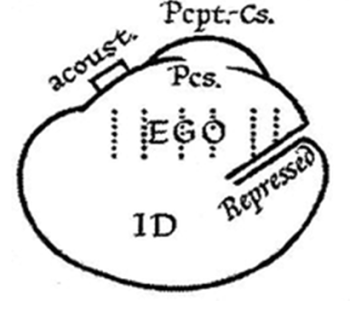
Freud’s second topography [7]
Lacan clearly has a problem with this representation of the psychical apparatus, which he rather disparagingly describes as a ‘spongy sack’ and which Greenshields holds responsible for becoming “…either the object of a naive depth psychology that mines for a hidden secret—the “all” that the subject cannot say—or the target of an ego psychology…”[8] And part of the problem here, as Greenshields points out, is the spatial representation of the various ‘parts’ of the apparatus. For example, the id is represented as being ‘below’ the ego thus giving rise to the idea that in order to ‘access’ the id one must ‘dig deep’ into the psyche. And one of the other problems with this representation, which Lacan is quick to point out, is that it misrepresents the ‘location’ of the drive:
Finally two bars shaded its junction, the relation of that baroque con- junction with the sack of the Triebe itself; that is what is designated as repressed. We remain perplexed. It was not the best thing Freud did. We should even infer that that does not favour the pertinence of the thought that it pretends to translate. What a difference from the definition that Freud gives of the Triebe as linked with the orifices of the body![9]
With his theory of the Borromean link (knot) Lacan creates an entirely different type of spatiality, which, whilst far more difficult to comprehend than Freud’s topography, opens up a radically new way of approaching the question of the human subject. As Greenshields notes:
With knots, the dominance of theoria over practice (the ability to see the theorised object and foresee the effect of one’s act on this object) is sternly challenged. The ideal would be that before we undertook a reading and (re)writing of the knot, there would be a generalisable tool that would define the object. The question of whether or not a particular knot is the unknot is a vital question for the psychoanalyst. If “thinking-the-Borromean-knot” gives us rather more pain that thinking about Freud’s topography, this is partly because it does not give itself to cognisance (imagination and abstraction) without the egoic observer getting his hands dirty.[10]
In other words, ‘thinking-the-Borromean-knot (link)’ requires a great deal of work and can only really be effected through putting Borromean topology to work, which is precisely what Lacan was doing in his later seminars, closely assisted by his two mathematician friends Pierre Soury and Michel Thomé.
In my view, the full impact of Lacan’s ‘Borromean turn’ is still to be felt; even though its ripples are slowly but surely spreading, particularly within the framework of what Miller describes as the ‘last Lacan’. One of the problems in confronting this period of his teaching, I would argue, is that it is still being read through the ‘lens’ of an earlier Lacan; one which is sometimes described as ‘French Theory’ although it has very little to do with the work of French theorists and a lot more to do with the ‘capture’ of Lacan’s work by the North American academy in the 1970s and 1980s.[11] However, because the move towards Borromean topology represents such a radical shift in Lacan’s thinking, in my view it is no longer enough to rely on a pre-existing ‘Lacanian discourse’ to try and get to grips with what Lacan is doing in these last few years of his life.
The Borromean link and its failure
On that note, let’s return to question of a psychoanalysis in the Real and, as a starting point, consider the ‘basic’ Borromean link (knot) as it appears on page 11 of The Sinthome:
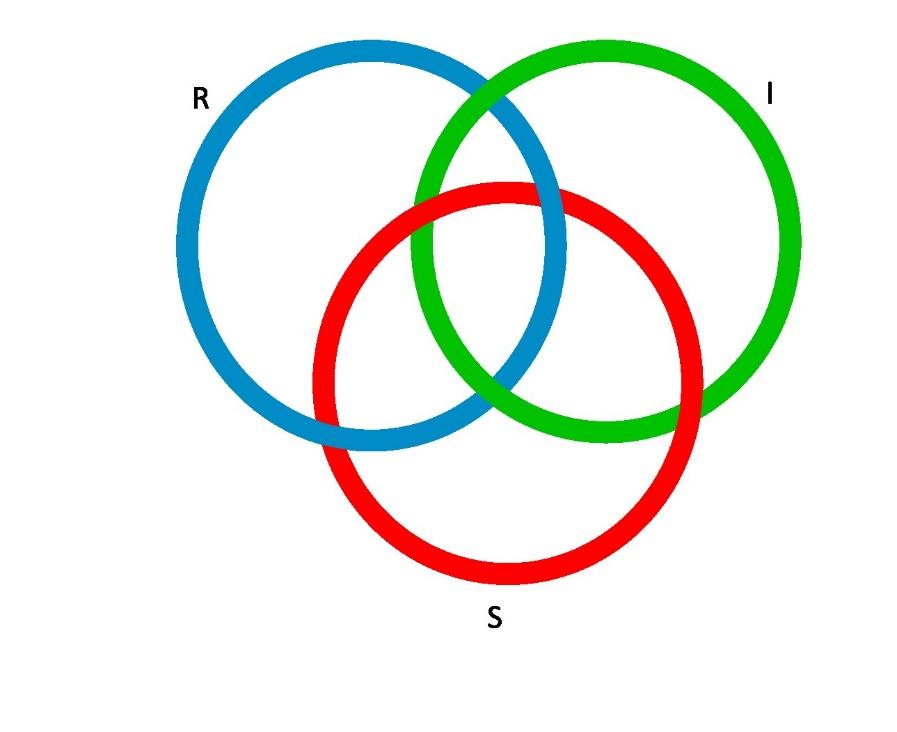
Figure 1: The basic RSI configuration [12]
Each ring represents one of the three registers (R = The Real, S = The Symbolic, I = The Imaginary). Although at first glance this may appear to be simply a picture of three coloured rings overlaying one another, a closer look will show that whilst this is case with R and I (I overlays R), if we start from the right-hand side of the projection and move in a counterclockwise direction, the S ring goes over I then under R, over I again and, finally, back under R. In other words, the S ring interlocks the other two rings so that none of them can be pulled apart unless one of the rings is broken. And, in fact, it doesn’t matter which of the three rings (RSI) is broken for the whole configuration to come apart. For example, if R is broken or removed S and I will immediately become separated because there is nothing holding them together. Likewise, if I is removed, R and S become separated; and, again, if S is removed, R and I become separated. And this, in essence, is the definition of the Borromean link.
But what has this got to do with psychoanalysis; and, more specifically, with a theory of the human subject? The first thing to note is that although this configuration is often portrayed as ‘the norm’ for the human subject, that is, as a kind of ‘base line’ for representing how the three registers would ‘normally’ be interlocked and thus preventing psychosis, in Seminar XXIII (The Sinthome) Lacan is very quick to point out that this is not the case:
It is precisely here [with the projection of the three ringed Borromean link] that we find what lies behind the error of thinking that this knot [link] is a norm for the relationship between the three functions that only exist one relative to the other in their implementation within the being, who, forming a knot, believes himself to be a man. It is not a break between the symbolic, the imaginary, and the real that defines perversion, it is that they already stand apart in such a way that a fourth term has to be supposed, which on this occasion is the sinthome. [13]
And when Lacan uses the term ‘perversion’ in this context he playing with the French portmanteau père-version, that is, a ‘version of the father’, or, more precisely, version vers le père (a version towards the father) and that “…all in all, the father is a symptom, or a sinthome, as you wish”. Furthermore: “The ex-sistence of the symptom [sinthome] is what is im-ply-cated by the very position that presupposes this enigmatic bond between the imaginary, the symbolic and the real.”[14]
In order to get a clearer idea of what Lacan is driving at consider the following:

Figure 2: 3 overlapping rings (non-Borromean)
Here it can be seen that this is not a Borromean link because none of the rings interlock with the others; that is, they are simply three rings overlaying one another. For such an interlocking to take place, that is, for there to be a proper Borromean link, a fourth element has to be introduced, namely the sinthome:
Figure 3: Overlapping rings with sinthome
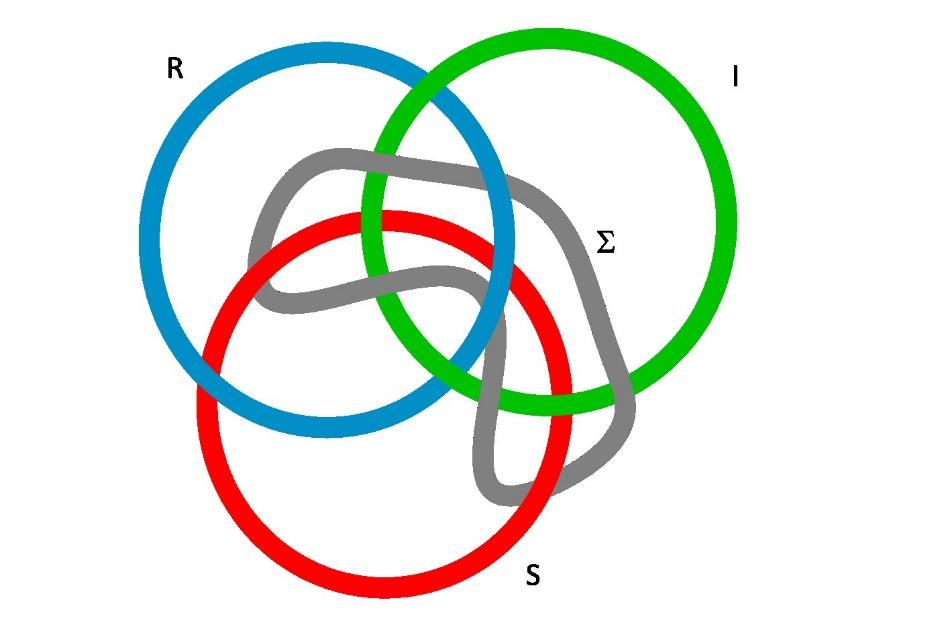
Here, the fourth (deformed) grey ring (labelled Σ for ‘sinthome’) ‘ties’ together the three other rings (RSI) and this is essentially the constitution of the human subject. Even the neurotic subject, which is often taken as the ‘baseline’ or ‘normal’ subject, has its own sinthome, the Name of the Father, as Lacan notes in his Joyce the Symptom lecture (delivered in June 1975 at the Sorbonne, prior to the commencement of Seminar XXIIII in the November of that year):
The father as a name and as he who names, that’s not that same. The father is this fourth element …without which nothing is possible in the knot of the symbolic, the imaginary and the real.
There is, however, another term for this. This is where today I’m going to crown what is involved in the Name-of-the-Father, at the very degree to which Joyce bears it out, with what it would be most suitable to call the sinthome. [15]
The sinthome and the hole in the Real
As Lacan argues in his seminar, the sinthome can take a number of forms; for example, in Joyce’s case (the focus of Seminar XXIII) it was his writing. But perhaps what’s even more interesting when it comes to the question of a psychoanalysis in the Real is that the psychoanalyst can be thought of a sinthome. Lacan makes this clear when responding a question at the end of lesson 9 in the seminar where someone in the audience proposes that psychoanalysis is a sinthome: “I do think that the psychoanalyst cannot be considered of otherwise than as a sinthome. Psychoanalysis is not the sinthome, the psychoanalyst is.”[16]
For me this raises several questions. Firstly, if both the Name of the Father and the psychoanalyst are sinthomes, ways to ‘tie together’ the Real, Symbolic and Imaginary, then why would a neurotic subject be in need of a psychoanalyst in the first place? In other words, if the neurotic subject is able to function in the world by virtue of the sinthome Name of the Father, then why would they call upon the services of an analyst? There are (at least) two answers to this question. Firstly, it is clear that many neurotic subjects are not functioning very well, in spite of (or because of) their sinthome. This suggests that the sinthome, whatever its form, is not necessary the answer to ‘happiness’, ‘mental health’, ‘fulfilment’, or whatever. The second response is that if the aim of analysis (at least in the case of neurosis) is the bring the subject “…back to his truly elementary signifiers, on which he has, in his neurosis, had a delusion”, as Miller puts it,[17] then having reached this point the subject will be in desperate need of another sinthome; and, as a ‘temporary stop gap’, so to speak, the analyst could function as one.
There is, however, an even more important consideration when it comes to the idea of the analyst as sinthome, and this relates to the idea of psychoanalysis operating in a ‘hole in the Real’ that I referred to at the beginning of this text. As I noted in my previous article, the concept of a ‘hole in the Real’ is linked closely to the topology of the Borromean link. In fact, the whole question of the hole (so to speak) in topology is quite complex and is rendered even more so when 3D topology is having to be ‘reduced’ to 2D in order to project the Borromean links on to a flat surface, that is, a page (paper or digital). Bearing all this is mind, consider again the diagram of the three overlaying but not interlocking rings:
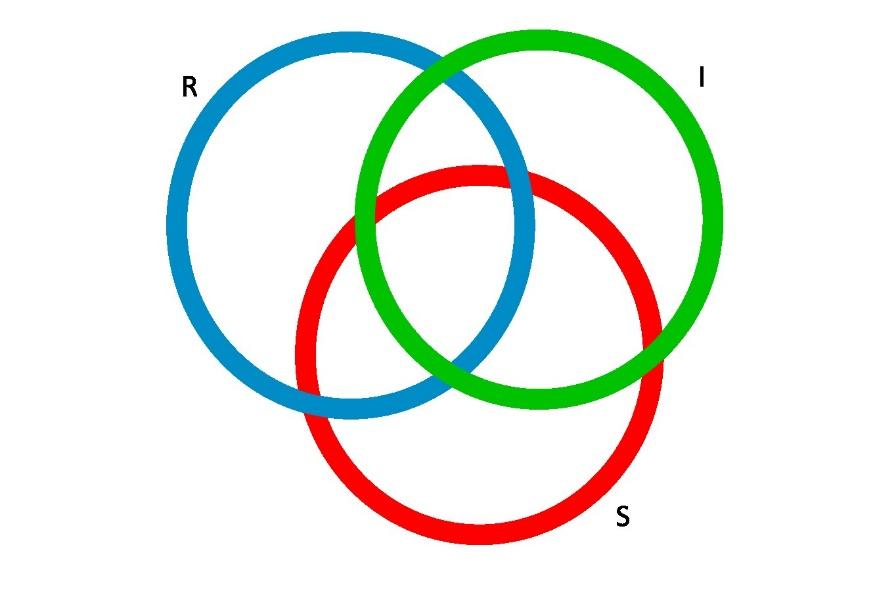
Figure 4: overlapping rings (non-Borromean configuration)
Although there may appear to be multiple ‘holes’ in this projection, topologically speaking there are only the three ‘contained’ in the individual rings (RSI); these are topological holes because none of the rings can be shrunk to a single point. However, the point of intersection (at the centre of the diagram) is not, topologically, a ‘hole’ because it simply represents the area where the three rings overlap. Or, to put it another way, this projection is simply a Venn diagram not a Borromean link.
But now consider this projection of a proper Borromean link:
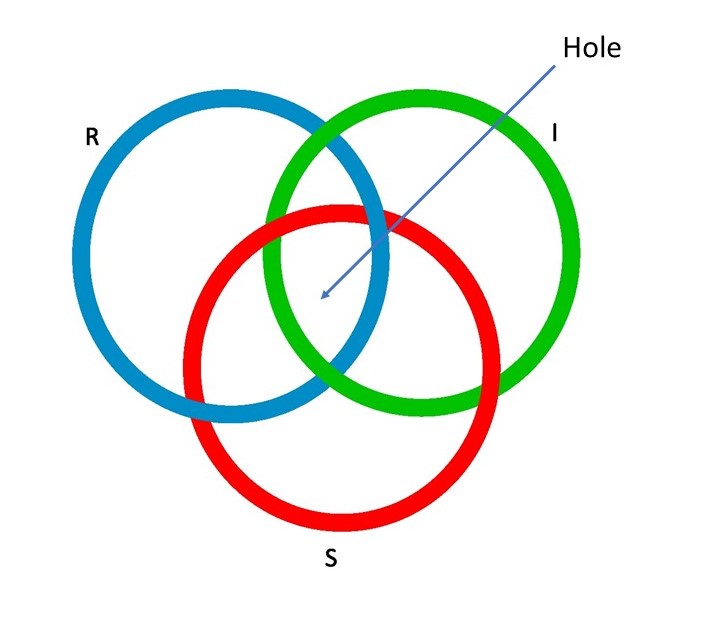
Figure 5: Borromean link with hole
Here, the point of intersection (not overlapping) of the three rings does constitute a topological hole. However, as a representation of the human subject, and as I argued earlier, this is an idealisation not a reality. For this to be a true representation of the subject a fourth element (ring) is necessary – the sinthome. What this suggests is that for there to be a hole in the Real there has to be the following Borromean configuration:
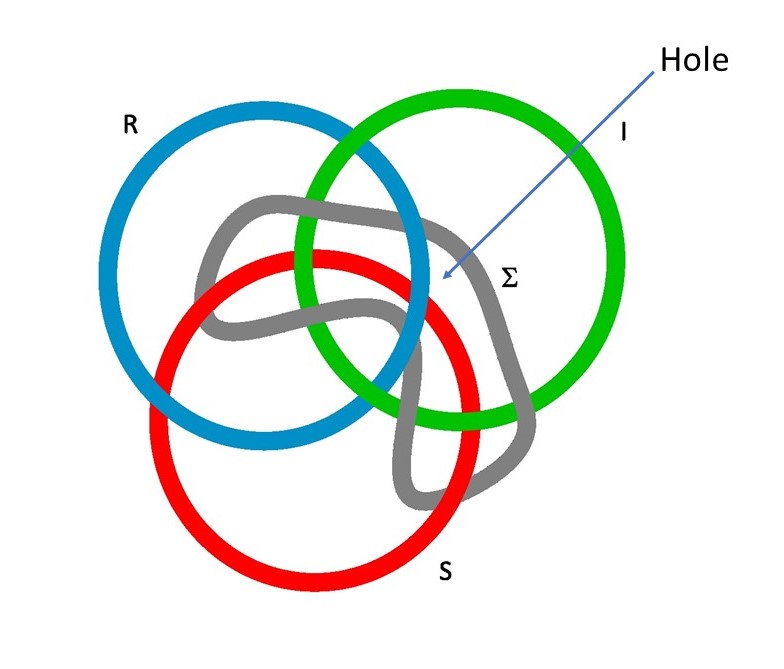
Figure 6: Overlapping rings with sinthome and hole
And at this point it is crucial to note that for Lacan, the Real is not represented by one of the three rings (R); rather, as Lacan states in Seminar XXIV, “The Real that is at stake, is the knot in its entirety.”[18] As Will Greenshields explains it:
If the knot’s constitutive, holed elements make a whole, this does not occur in a fashion to which we are accustomed. Throughout Seminar XXII and Seminar XXIII, Lacan presents R, S, and I not in terms of letters secondarily affixed to the knot but as structural qualities that, together, are the knot. The knot does not serve as an analogical map for R, S and I, but instead is R, S and I. Since each of the rings ex-sist to the others, each ring is real and, furthermore, since it is impossible, thanks to this structuration of parts, that the knot’s minimum be anything other than it is, “The Real that is at stake, is the knot in its entirety.”[19]
What of the hole in the Real? As indicated in Figure 5, in a true Borromean link there is a proper (topological) hole at the intersection of RSI. This is the ‘hole in the Real’. But, as I argued just now, this three ring Borromean configuration does not represent the human subject; instead, a fourth ring (the sinthome) must be inserted and then the location of the (topological) hole is as indicated in Figure 6.
The crux of my argument is that in order for there to be a hole in the Real there has to be an interlocking (as opposed to a simply overlapping) of RSI. If such an interlocking is not present, there is no Borromean link and therefore the three elements (RSI), simply float apart. And this, according to Lacan, is what happens in psychosis. In order to prevent such a floating apart a fourth element (the sinthome) must be introduced which ‘ties together’ RSI. As noted earlier, in Joyce’s case it was his writing, and in the case of the neurotic subject it is the Name of the Father. So basically: no sinthome, no hole in the Real; and no hole in the Real, no (viable) human subject.
The analyst as sinthome
Which brings me back to the question of the analyst as sinthome. When Miller refers to a psychoanalysis that operates in the Real,[20] one way to think of this is that the analyst creates the hole in the Real in order that the subject can sustain themselves. However, the establishment of this process of ‘self-sustainment’, for want of a better term, takes time; and in the meantime it is the work of analysis to sustain or maintain the establishment of this hole. In Joyce’s case, as I’ve already noted, it was his writing that sustained him – and this was in the absence of a psychoanalysis. On the other hand, for some people the analyst will remain forever (or at least for the lifetime of the individual) their sinthome, their way of maintaining their own particular hole in the Real. In fact, many of these people will become analysts themselves in order to maintain their sinthome.
But is this it? Is this the work of analysis? Or, more specifically, is this the work of the analyst: as a digger and maintainer of holes? Furthermore, is this the case for both neurotic and psychotic subjects? Tackling the second question first, as I discussed earlier, Lacan argues that the Name of the Father is a sinthome, which means that the neurotic subject has their own, ready-made ‘hole’. But as I also noted, clearly for many neurotic subjects such a sinthome doesn’t work so well; if it did, why would they come for analysis? However, what exactly does it mean to say that the Name of the Father doesn’t work so well for the (neurotic) subject? Perhaps another way to look at this is to argue that perhaps the Name of the Father works too well, but in doing so exacts a heavy price for the subject. In other words, repression (of the Name of the Father) works – but at a cost. And this is where the analyst comes in: they can provide a ‘substitute’ sinthome for the subject whilst they work through their existing sinthome and work out how to reconfigure it so that it is not problematic for them.
With the psychotic subject, on the other hand, it seems far more obvious that they are in need of a sinthome; something to ‘hold’ them together. For the paranoid subject their delusions can function as a sinthome, and it may be that only when their delusions start to fail, start to unravel, that they will approach an analyst. At this point the analyst can provide another sinthome – themselves – until the subject is able to construct a more permanent, a more robust, sinthome for themselves. At this point, however, it appears that there is not a lot of difference between the ‘functioning’ of the analyst as sinthome in both neurosis and psychosis; in fact, the only real difference appears to be that the neurotic subject already has a ready-made, albeit problematic, sinthome, whereas the psychotic subject does not. But as I’ve just pointed out, for some psychotic subjects at least, they do have a ready-made sinthome to hand, that is, their delusions. However, I also argued that the reason a psychotic subject may come for analysis is because their delusions are no longer working for them; and the nature of this ‘not working’ is very different from the ‘not working’ of the Name of the Father. For the neurotic subject the ‘not working’ is, in fact, a ‘working too well’, in the sense that the repression of the Name of the Father is causing all kinds of problems for the subject; these can range from the somatic conversions of the hysteric to the ritualistic behaviours of the obsessive. With the psychotic (paranoid) subject, on the other hand, the problem is that their delusions are simply coming apart; or, in some cases, are becoming so self-destructive that they have become a danger to the subject and those around them.
Conclusion: welcome to Planet Borromeo!
Some commentators, including it would appear Roudinesco herself, seem to consider Lacan’s ‘Borromean turn’ as a rather unfortunate and, in some ways, a rather sad way to end his both his professional and biological life. Some have even argued that this was symptomatic of a cognitive decline that resulted in Lacan saying very little in his increasingly short ‘seminars’. On the other hand, perhaps this is to miss the point entirely. The whole purpose of Lacan’s journey to Planet Borromeo was, in my view, to try and take psychoanalysis in a completely new direction. By the mid-1970s, which ushered in the period of the ‘last Lacan’, ‘Lacanianism’ was already starting to grip much of the psychoanalytic establishment; which helps explain Lacan’s remarks at the Caracas seminar that I quoted earlier regarding the difference between how his audience saw themselves and how he saw himself. And as Miller points out in his commentary on Seminar XXIII (which appears as an appendix to the English translation) Lacan was getting increasingly irritated by the large number of people attending the seminar:
Lacan’s repeating lamenting in The Sinthome as to the inordinate number of people in his audience clearly hints that the doctrine he was exposing to the four winds was meant to be kept secret. Giving a public forum to an esoteric teaching forces one to conceal at the same time as disclosing.[21]
But perhaps even more revealing (and prescient) is this comment that Miller makes a bit later in his text:
The day when there are Lacanians in the university just as now [in 2005] there are Joyceans, when ‘to be Lacanian’ will mean the same thing as ‘to be Joycean’, namely to be possessed by a love of the text, there can be no doubting that they will have much on their plate. This day will surely come, but should it be eagerly anticipated and hastened on? They will surely soon find themselves turning round in circles.[22]
This day has certainly well and truly arrived, and there certainly appears to be a lot of turning in circles. Time to depart for Planet Borromeo…..?
Notes and references
- Although just to confuse things somewhat, throughout Seminar XXIII, Lacan refers to both the Borromean knot and the Borromean link, and in most cases (though not all) appears to correct himself by stating that the knot is really a link. The reason for this is that the Borromean ‘knot’ is a special case of the Brunnian link, a well-known configuration in knot theory. For more information on this I recommend Colin Adams’ The Knot Book : An Elementary Introduction to the Mathematical Theory of Knots. American Mathematical Society, 2001. ↑
- Elisabeth Roudinesco, Jacques Lacan: An Outline of a Life and a History of a System of Thought (Polity Press, 1997). ↑
- Will Greenshields, Writing the Structures of the Subject: Lacan and Topology, The Palgrave Lacan Series (Palgrave Macmillan, 2017). ↑
- Jacques Lacan, ‘The Seminar, Caracas, 12th July 1980’, Papers of the Freudian School of Melbourne 2 (1981), 104. ↑
- Ibid. ↑
- Although what this diagram does not make clear is that the super-ego, according to Freud, emerges out of the Id. There is a clearer diagram, which does name the superego, on p.78 of Freud’s New Introductory Lectures. ↑
- Sigmund Freud, ‘The Ego and the Id’, in The Standard Edition of the Complete Psychological Works of Sigmund Freud, XIX (Hogarth Press, 1923), 24. ↑
- Greenshields, Writing the Structures of the Subject, 207. ↑
- Lacan, ‘The Seminar, Caracas’, 104-105. ↑
- Greenshields, Writing the Structures of the Subject, 212, italics in original. ↑
- For a good introduction to the idea of ‘French Theory’ see Lydia Liu’s ‘The Cybernetic Unconscious: Rethinking Lacan, Poe, and French Theory’. Critical Inquiry 36, no. 2 (2010): 288–320. Also see Johannes Angermuller’s Why There Is No Poststructuralism in France: The Making of an Intellectual Generation. Bloomsbury Academic, 2015. ↑
- Jacques Lacan, The Sinthome: The Seminar of Jacques Lacan, Book XXIII, ed. Jacques-Alain Miller (Polity Press, 2016). ↑
- Ibid., 11. ↑
- Ibid., 11. ↑
- Jacques Lacan, ‘Joyce the Symptom’, in The Seminar of Jacques Lacan Book XXIII 1975-76: The Sinthome, ed. Jacques-Alain Miller (Polity Press, 2016), 147, emphasis in original. ↑
- Lacan, The Sinthome, 116. ↑
- Jacques-Alain Miller, ‘Interpretation in Reverse’, in The Later Lacan: An Introduction, ed. by Véronique Voruz and Bogdan Wolf (State of New York: Sunny Press, 2007), 7. ↑
- Lacan, Seminar XXIV, 88. ↑
- Will Greenshields, Writing the Structures of the Subject: Lacan and Topology, The Palgrave Lacan Series (Palgrave Macmillan, 2017), 219, italics in original. ↑
- Jacques-Alain Miller, ‘A Fantasy’, Psychoanalytical Notebooks, no. 34 (December 2019): 139–73. ↑
- Jacques-Alain Miller, ‘A Note Threaded Stitch by Stitch’, in The Sinthome: The Seminar of Jacques Lacan Book XXIII (Polity Press, 2016), 182. ↑
- Ibid., 191. ↑
The formalisation of the Borromean knots provides the scaffolding for a contemporary clinic of the Real. To explore further entries on the ‘very late Lacan’ and the status of the subject, please visit The Borromean Clinic Hub.
Last updated: August 30, 2026